
First published: June 23, 2026 at 08:05 AM
Last update: June 23, 2026 at 09:06 PM
Issue
Issue for June 23, 2026
This is the stable daily issue page at `/digest/2026-06-23/`: all updates for the day are collected in one feed with a verification log.
Last update: June 23, 2026 at 09:06 PMCards: 7Stories: 2
Fresh issue
June 23, 2026
June 23 issue: parliament debated 37 amendments on the Mrdic judicial laws and moved the continuation to June 24, the Aleksandar Radic case gained his explanation of the 'sound cannon' account plus lawyer, former VJT prosecutor, Beta editor, and Ana Brnabic follow-ups, Belgrade opened the overhaul of 29 CAF trams and new transport changes around Ušće, Obalskih radnika, and Mladenovac, OFAC extended NIS and MOL licenses to July 1, RHMZ warns of showers and hail through June 25, and 021 updated Novi Sad traffic.
News feed
Issue cards
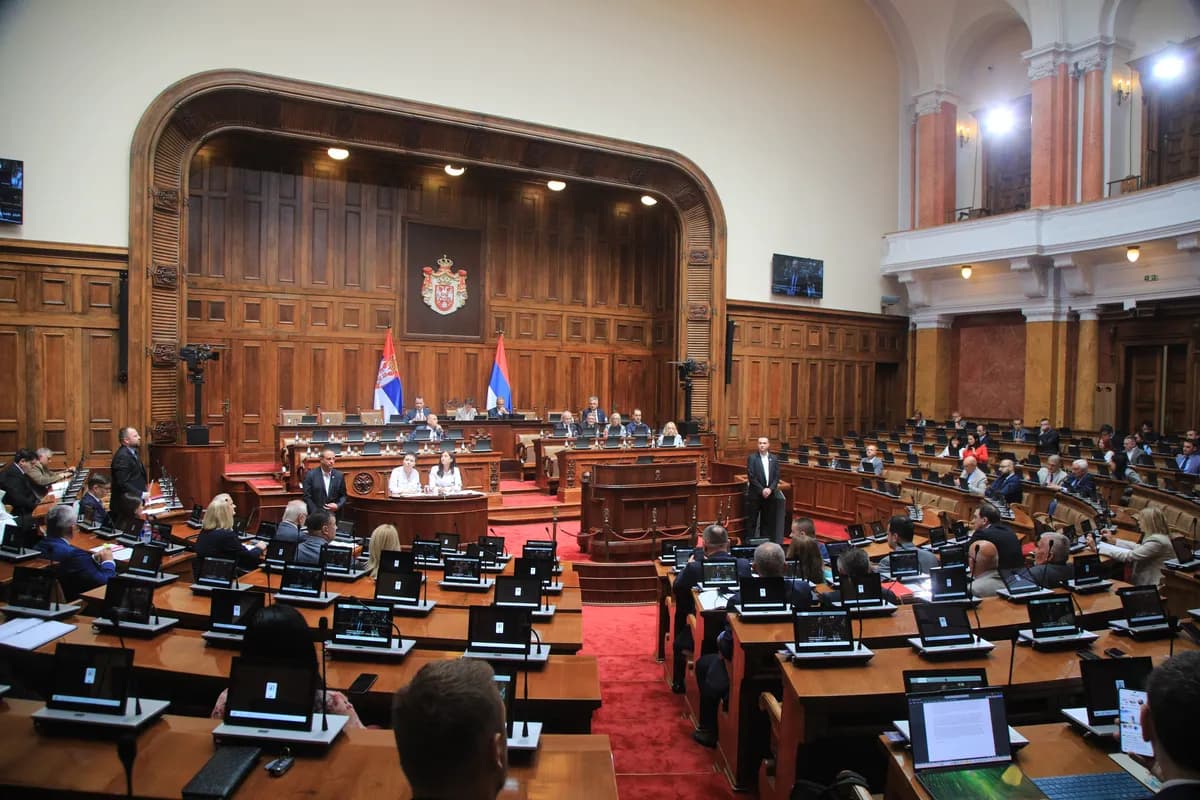
On June 23, Serbia's parliament continued its extraordinary session on 32 agenda items and moved to debate 37 amendments to the key judicial laws in the Mrdic package; according to N1, opposition amendments were rejected. The sitting ended at about 18:00 and is scheduled to continue on June 24 at 10:00; Justice Minister Nenad Vujic again says the proposals were aligned with the Venice Commission and the EU, while opposition MPs also used the session to raise questions on EXPO and the 'sound cannon' case.
Context: Serbia and EU accession

After the June 22 searches, Aleksandar Radic told N1 he had been summoned to military police for forensic examination of seized computers, and later explained that he links his conclusion about sound-weapon use on March 15 to Faraday material and an umbrella that, he says, people from Ćacilend were carrying. Danas carried lawyer Stefan Corda's account of three VJT prosecutors, questioning over media appearances, and no elements of a crime, as well as Beta editor Vojkan Kostic's interview describing his UKP summons as media intimidation; Kurir carries Ana Brnabic's statement that the 'sound cannon' story was a pre-planned lie against Aleksandar Vucic.
N1Radic says he was summoned to military police for forensics on computers seized during searchesN1FBD warns the new wave of VJT activity must not be seen only as individual repressionN1Brnabic: The public knew there was no sound cannonN1Radic explains how he concluded a sound cannon was usedDanasAleksandar Radic's lawyer: This is a campaign, there are no elements of a crimeDanasBeta editor: The UKP summons looks like media intimidationDanasPaunovic: No grounds for an investigation into alleged simulation of sound-cannon useKurirAna Brnabic on the sound cannon: It was a pre-planned lie
Open news item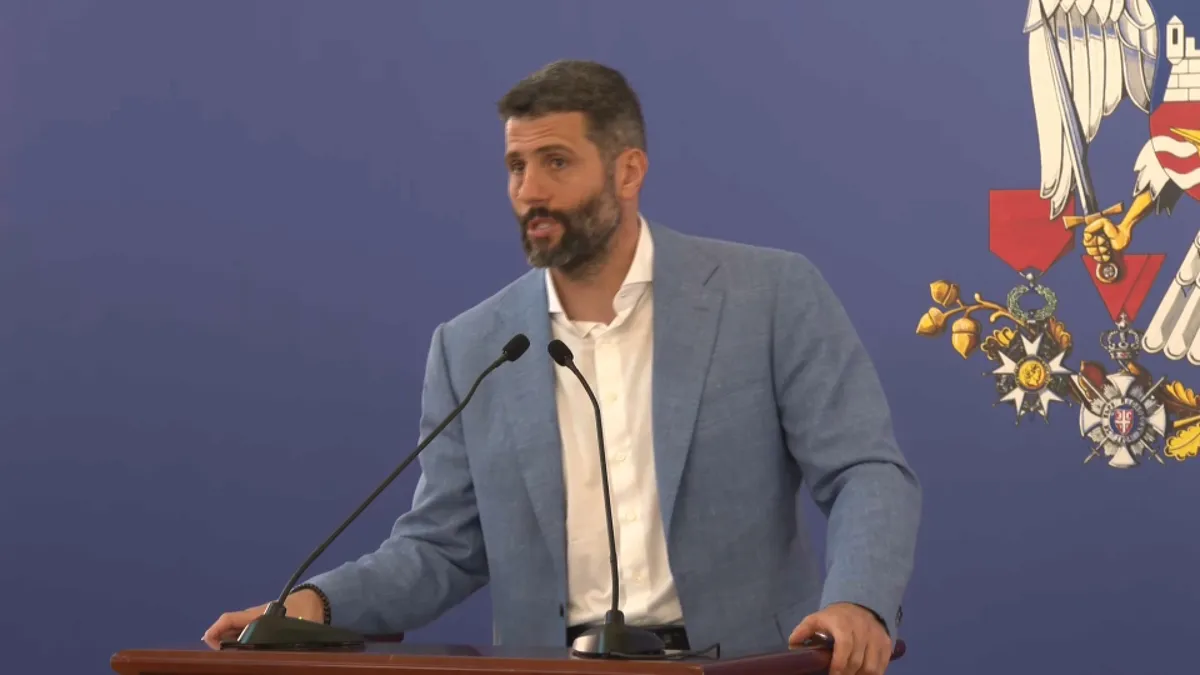
Mayor Aleksandar Sapic said on June 23 that the city has opened procurement for a full overhaul of 29 Spanish CAF trams; if the process succeeds, Belgrade should receive another 30 new trams within two years, while the city is not abandoning a larger 80-100 tram procurement. In the same remarks he confirmed timelines for several city projects: the new Sava bridge remains in the spring-summer window, Gandijeva works are expected by spring-summer 2027, and the New Belgrade BAS station building is being built at 27,000 square meters.
Beoinfo published three transport notices on June 23: during Belgrade music week from June 25 to 29, parts of Bulevar Nikole Tesle, the Ušće roundabout, and Ušće Street will close in stages, with lines 15, 84, 704, 706, 707, 9A, and 60/60L using changed routes. From June 24 to July 8, works on Obalskih radnika change lines 80, 87, and 87A, while in Mladenovac, after a sidewalk collapse on Kosmajska Street, 17 suburban lines run from AS Mladenovac via Braće Badžak.
021 reports that the US Treasury's OFAC extended NIS's operating license and MOL's license for talks on buying the Russian stake until July 1; the previous licenses were valid until June 16. In the same article, economist Jeffrey Sachs tells RTS that US sanctions against NIS are illegal and unilateral, arguing that the US should not dictate Serbia's cooperation terms with Russia.
Context: NIS and sanctions
N1 carries an RHMZ warning: on June 23 Serbia can expect showers and thunderstorms, locally stronger around midday and afternoon, with short-lived hail more likely in central, eastern, and southeastern Serbia; local storms and showers are also possible on June 24 and 25. Separately, Dr Ivana Stefanovic of Belgrade emergency services told N1 that a tropical night with temperatures above 20 degrees increased calls, especially from cardiovascular patients.
021 updated its traffic-service overview for Tuesday, June 23 through 14:38: the headline now highlights a crash on the Novi Sad - Belgrade autoput near the start of roadworks and a Škoda interceptor with Belgrade plates on the Novi Sad - Zrenjanin road. The feed also lists a radar on Bulevar Evrope toward Telep, a crash on Novosadskog sajma Street, a Telep patrol, earlier radars, and heating-pipeline works on Alekse Šantića Street, where numbers 64-74 and part of the far-right lane of Bulevar cara Lazara are closed until July 27.
Context
Long-running stories with updates
Stories
NIS and sanctions
NIS is Serbia's key oil company and the operator of the Pančevo refinery. This story follows how sanctions against the Russian stake in the company affect fuel supplies, Serbia's talks with MOL, Gazprom Neft, and the United States, and control over strategic infrastructure.
- On 5 August, the ministry said low Danube levels were making fuel-product supplies difficult. NIS expects to raise crude processing in the second half of August from about 9,500 to about 13,000 tonnes a day; the authorities plan to allow about 23,000 tonnes of operational reserves to be used by other oil companies. Imports of about 20,000 tonnes of diesel by water remain uncertain.
- On 2 August, Aleksandar Vučić warned that the Pančevo refinery might have to pause temporarily if the Danube keeps falling. On 3 August, N1 reported that the refinery was operating normally, the river level was not yet affecting production, and savings measures were being applied in other processes. No refinery shutdown has been announced.
- OFAC extended NIS’s operating licence, MOL’s licence to negotiate with Gazprom Neft over the Russian stake, and JANAF’s licence to transport oil for NIS until 28 August 2026; this preserves the company’s operations and crude-oil refining, but no final ownership agreement has been announced.
- The Serbia-MOL agreement signed on June 16 takes effect only if MOL acquires 56.15 percent of NIS and OFAC approves the transaction; under that framework Serbia is to acquire another five percent and raise its stake to about 35 percent, while MOL would hold control with 51.15 percent.
- The agreement provides for at least ten years of operations at the Pančevo refinery at capacity comparable to the four-year pre-sanctions average and uninterrupted operations at Petrohemija.
- On July 26 Aleksandar Vučić named the end of September as a target for technical completion. It is an expectation, not an announced signed deal; the immediate open questions are the terms of a Russian-stake transaction and operations after 28 August.
Timeline
How the story developed
Serbia privatized NIS and the controlling stake moved to the Russian side. From that point on, ownership in NIS became not only a business question but also part of Serbia's relations with Russia, the EU, and the United States.
US sanctions against NIS became a practical threat to the company's operations and required special OFAC licenses so that NIS could continue operating while a solution on ownership was being sought.
MOL and Gazprom Neft announced a preliminary framework for the purchase of 56.15 percent of NIS, but the transaction remained dependent on OFAC, regulatory approvals, and a final sale contract.
Serbia and MOL announced a compromise on the shareholder agreement: Serbia gets additional governance rights, the Pančevo refinery is supposed to keep operating, and the key immediate deadline remains June 16, 2026. Later the minister clarified that Serbia had completed its part, but the deal now depends on Gazprom Neft, MOL, and the United States; evening N1 and Danas items stressed that without a statute change, the extra five percent of shares is not the same as control.
Forbes/N1 checked Ranko Mimović's company, which Reuters had linked on May 6 to a EUR 2 billion offer to buy NIS. KFT Senator Treasury G.T.7 Dva had its account blocked six times in half a year at the Tax Administration's initiative, and on May 28 a first court dispute for RSD 98,496 was opened against it; this deepened doubts around alternative Serbian offers for NIS.
021, citing RTS, carried Jelica Putniković's assessment that the key decision is expected on Tuesday, June 16, when existing NIS licenses expire. She tied the outcome to OFAC consent, concrete contracts, possible governance changes, and the future of the Pančevo refinery.
Serbia and MOL signed a shareholder agreement on the future management of NIS. It depends on MOL's final deal with Gazprom Neft for 56.15 percent of NIS and OFAC approval; the same day Vučić said he expects the NIS license to be extended by 15 days.
Dubravka Đedović Handanović said that after the agreement with MOL, the Serbian side has completed its part of the talks, while the final NIS sale now depends on Gazprom Neft, MOL, and whether the solution is acceptable to OFAC.
021 reported that OFAC extended NIS's operating license and MOL's license for negotiations on buying the Russian stake until July 1, temporarily preserving the company's operations and oil refining after the previous June 16 deadline.
Danas reported that on July 1 NIS's operating license for importing oil via JANAF and the Gazprom Neft-MOL negotiation license expire; NIS filed a new request, while Serbia's authorities told the IMF they have fallback executive and legal measures if talks fail. N1 later added that the talks are unfolding amid Hungarian political-legal risks around MOL: the European arrest warrant for Zsolt Hernadi remains valid, and MOL's excess-profit tax is being expanded.
The US extended NIS's operating license for another 30 days, until July 31. According to Danas/BBC and Novosti, this keeps the company operating, fuel supplies flowing, and crude oil processing continuing at the Pančevo refinery; later, N1 and Danas added that JANAF received a license until July 31 for deliveries to NIS, while MOL received a license until July 31, 2026 to continue talks on the majority Russian stake.
OFAC extended NIS’s operating licence, MOL’s licence to negotiate with Gazprom Neft over the Russian majority stake, and JANAF’s licence to transport oil for NIS until 28 August. This keeps crude procurement, deliveries and Pančevo refining running, but does not complete the ownership transaction.
The ministry said the low Danube is complicating fuel-product supplies. NIS expects to increase crude processing in the second half of August from about 9,500 to about 13,000 tonnes a day once already ordered deliveries arrive; the authorities plan to make about 23,000 tonnes of operational reserves available to other companies. Imports of about 20,000 tonnes of diesel by water remain uncertain.
Stories
Serbia and EU accession
This story tracks Serbia's EU talks, the rule of law, media issues and foreign-policy alignment. In July, at least five EU states opposed opening Cluster 3, the European Commission flagged problems in justice, anti-corruption policy and journalist safety, and Serbia aligned with two of six new EU foreign-policy decisions.
- On July 29, the EU said Serbia aligned with decisions on Lebanon and Sudan but not with four restrictive-measures decisions linked to Russia, cyberattacks and serious human-rights abuses. The other Western Balkan candidates aligned with all four.
- Serbia has not opened new negotiation chapters since December 2021. In July, at least five EU states opposed opening Cluster 3; no new decision to open the cluster has been made.
- The European Commission's July 17 report flags political pressure on courts and prosecutors, an unimplemented part of the anti-corruption plan, problems with REM and worsening journalist safety.
- Four independent REM Council members decided to take up work, but the ninth seat remains vacant. The first vote for chair ended 4-4, so the Council's leadership has not yet been elected.
- Parliament adopted a package of five judicial laws on June 25. The Venice Commission's follow-up opinion found seven of nine recommendations implemented, but the return of two TOK prosecutors and the autonomy of the cybercrime unit were not fully resolved.
- The next checkable milestones are EU-state consensus on Cluster 3, completion and leadership of the REM Council, and resolution of the remaining judicial-reform concerns.
Timeline
How the story developed
Serbia last opened new EU negotiation chapters in December 2021; that fact again became part of the dispute around Cluster 3.
Parliament adopted amendments to five judicial laws on MP Ugljesa Mrdic's proposal; professional groups and the EU later criticized them as a risk to prosecutorial autonomy and judicial independence.
The Venice Commission published an urgent opinion on the January amendments and issued seven key recommendations to address the shortcomings.
The Justice Ministry sent improved working drafts of the judicial-law amendments to parliament for transmission to Venice Commission rapporteurs.
Ana Brnabic said the Venice Commission gave a positive opinion on the package, that the amendments would go to parliament next week, and that she expects Cluster 3 to open soon.
The Venice Commission published its follow-up opinion: Serbia implemented seven of nine recommendations, but two key areas - the return of two organized-crime prosecutors and autonomy for the cybercrime unit - are not fully implemented.
Parliament put amendments to five judicial laws on an extraordinary session agenda, including laws on public prosecution, judges, the High Prosecutorial Council, court and prosecutor territories, and bodies for fighting high-tech crime.
VST decided to assign Irena Bjelos, Aleksandar Barac, and Boris Majlat to TOK for three years; the decision for Bjelos and Barac passed with nine votes in favor and one abstention, while Majlat's passed with eight in favor, one against, and one abstention.
Platforma za evropsku Srbiju informed EU institutions of allegedly different judicial-law texts for the Venice Commission and parliament; the Justice Ministry rejected the claims of differences.
At the extraordinary session on 32 agenda items, parliament debated 37 amendments to the key judicial laws in the Mrdic package. N1 reports that opposition amendments were rejected; the sitting ended at about 18:00 and is scheduled to continue on June 24 at 10:00.
Parliament finished detailed debate on all 32 items of the extraordinary session; voting, including on the judicial-law package, is scheduled for June 25 at 10:00.
Parliament adopted a package of five judicial laws, and the government formed a negotiating team for Serbia's inclusion in the EU 'Roam Like at Home' regime.
Dubravka Valić Nedeljković said four elected REM Council members whose resignations were not verified by parliament are ready to return only with guarantees: the ninth member should be chosen after national-council elections, and Ištvan Bodžoni should not be on the candidate harmonization list.
RFE/RL/N1/Danas reported that the Netherlands officially opposes opening Cluster 3 with Serbia, while diplomatic sources say at least five EU states oppose it, including three Baltic states and Sweden.
Four independent REM Council members said they decided to take up work after parliament adopted an authentic interpretation of the Electronic Media Law; their earlier resignation statements were interpreted as having no independent legal effect because they had not taken office.
The European Parliament's official X account posted its position on the rule of law, democratic standards, free and fair elections, and normalization of relations with Kosovo. The post was not a new negotiating decision.
European Parliament rapporteur Tonino Picula told N1 that the preparation, conduct, and aftermath of future elections would be an important criterion in assessing Brussels' relations with Belgrade. He also judged opening Cluster 3 unlikely; this is his assessment, not a new EU decision.
The European Commission published Serbia's chapter in its annual Rule of Law Report. It cites political pressure on courts and prosecutors, problems with implementing the anti-corruption plan, REM, and journalist safety; it is not a decision to open a negotiation cluster.