
First published: June 24, 2026 at 08:06 AM
Last update: June 25, 2026 at 10:12 AM
Issue
Issue for June 24, 2026
This is the stable daily issue page at `/digest/2026-06-24/`: all updates for the day are collected in one feed with a verification log.
Last update: June 25, 2026 at 10:12 AMCards: 6Stories: 2
Fresh issue
June 24, 2026
In the June 24 issue: parliament finished debate on all 32 items and votes on June 25; the “sound cannon” dispute widened to the bar association reaction and NKEU’s call for an international inquiry; GSP workers handed demands to Vucic; new Bankwatch and RERI data track pollution; and EXPO 2027 now affects a Studentski grad dormitory.
News feed
Issue cards
On June 24, MPs finished detailed debate on all items of the extraordinary session; Ana Brnabic announced voting on 32 agenda points, including the judicial-law package, for June 25 at 10:00. The final block covered state guarantees for Srbijagas and Srbijavoz loans; Dusan Bajatovic said Srbijagas lost EUR 200 million over two years because of social pricing policy, while opposition MPs cited corruption, rising public debt, and commercial-bank loans with interest rates up to 4.78%.
Context: Serbia and EU accession
021Serbian MPs sit in extraordinary session again, with the organ-transplant law on the agendaN1Debate on the organ-transplant law ends, MPs now discuss motorway constructionN1Serbian parliament finishes debate, voting tomorrow on all agenda items021Serbian parliament finishes debate, voting tomorrow on all agenda items
Open news itemAfter Aleksandar Olenik’s UKP interview on June 24, the dispute widened: the Belgrade Bar Association board accused VJT and prosecutor Miodrag Markovic of undermining the presumption of innocence and procedural rights, while VJT replied that the bar’s reaction was pressure on prosecutors. Separately, NKEU backed civil-society requests to UN bodies for an independent international investigation into claims that a “sound cannon” was used at the March 15, 2025 protest.
N1Olenik after UKP interview: They wanted to know where my sound-cannon information came fromDanasOlenik explains to Danas why he was called to UKP and announces a complaint against prosecutor MarkovicDanasVJT: Military Police acted lawfully in the sound-cannon and military-analyst case021'Sound cannon' case: lawyer seeks publication of evidence, says minutes do not support prosecutorsKurirKurir: A debunked alleged sound-cannon affair has weakened the blockers' argumentsN1Belgrade Bar board criticizes VJT and prosecutor Markovic, prosecutors call it pressure and threat021NKEU backs demand for an international investigation into sound-cannon allegations
Open news itemAccording to Bankwatch data carried by 021, coal-fired power plants in Serbia, Bosnia and Herzegovina, Kosovo, and North Macedonia emitted 6.6 times more pollution than permitted in 2025. Serbia ranked second for SO2: 177,756 tonnes, or 5.1 times the allowed amount. The report also says regional dust pollution was 2.9 times above the limit and identifies TENT B as Serbia's largest NOx source at 11,247 tonnes; since January 2026, the CBAM mechanism has increased the cost of electricity exports to the EU.
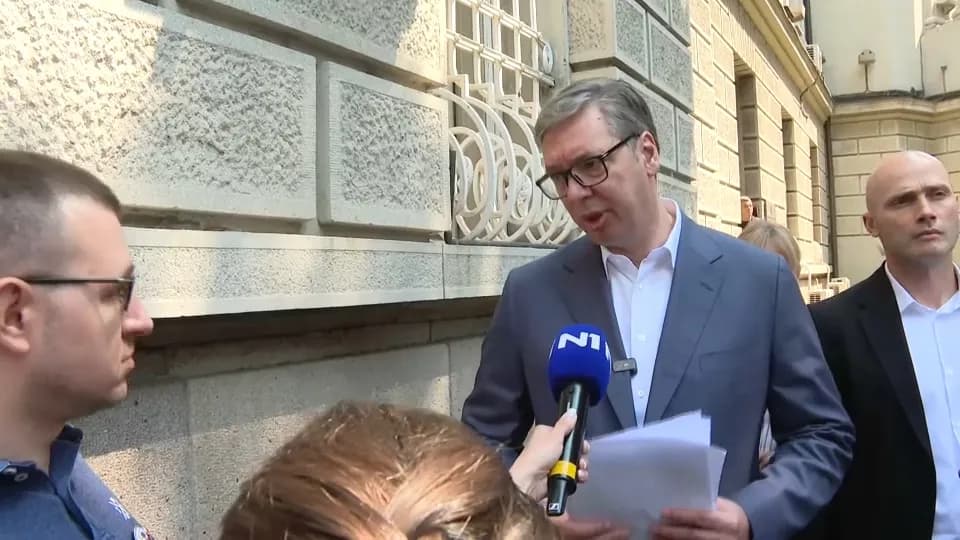
On June 24, GSP workers, unions, and professional associations handed demands to President Aleksandar Vucic. Ivan Bankovic of Sindikat GSP Centar told N1 Belgrade needs at least 90 trolleybuses, while the city proposes buying 60 and leaving the rest to a private operator for 20 years; Vucic promised an answer and a delegation meeting within seven days, while Novosti emphasizes his message that problems can be solved through conversation and dialogue.
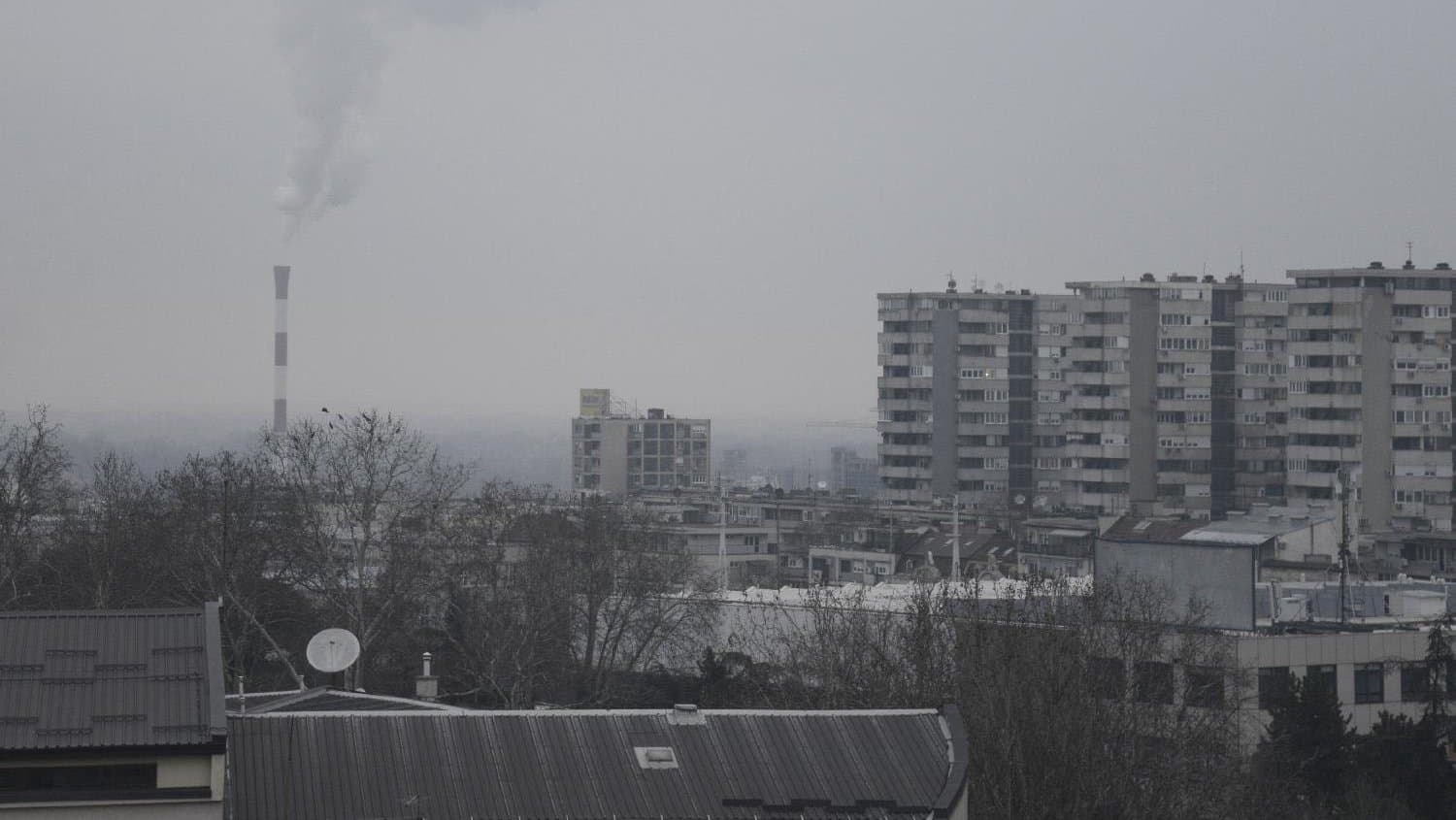
RERI published its 2025 air-quality analysis: all 97 Serbian stations with sufficiently reliable data recorded exceedances of the European standard, and PM2.5 exceedances averaged 104 days. The organization notes that the government's own program links air pollution to nearly 10,000 premature deaths per year and criticizes delays in measures on imported vehicles, industrial emissions, and permits for polluters.
On June 24, N1, Danas, and 021 reported that students in the second block of Dom 2’s F wing at Studentski grad must vacate their rooms by April 16, 2027 because of EXPO 2027. A Studentski centar “Beograd” notice says the F wing is allocated to the exhibition from May 1 to August 30, 2027; Studentski centar later told N1 this is not eviction but temporary relocation of some students within its capacity under the same conditions.
Context: EXPO 2027 in Belgrade
Context
Long-running stories with updates
Stories
Serbia and EU accession
This story tracks Serbia's EU talks, the rule of law, media issues and foreign-policy alignment. In July, at least five EU states opposed opening Cluster 3, the European Commission flagged problems in justice, anti-corruption policy and journalist safety, and Serbia aligned with two of six new EU foreign-policy decisions.
- On July 29, the EU said Serbia aligned with decisions on Lebanon and Sudan but not with four restrictive-measures decisions linked to Russia, cyberattacks and serious human-rights abuses. The other Western Balkan candidates aligned with all four.
- Serbia has not opened new negotiation chapters since December 2021. In July, at least five EU states opposed opening Cluster 3; no new decision to open the cluster has been made.
- The European Commission's July 17 report flags political pressure on courts and prosecutors, an unimplemented part of the anti-corruption plan, problems with REM and worsening journalist safety.
- Four independent REM Council members decided to take up work, but the ninth seat remains vacant. The first vote for chair ended 4-4, so the Council's leadership has not yet been elected.
- Parliament adopted a package of five judicial laws on June 25. The Venice Commission's follow-up opinion found seven of nine recommendations implemented, but the return of two TOK prosecutors and the autonomy of the cybercrime unit were not fully resolved.
- The next checkable milestones are EU-state consensus on Cluster 3, completion and leadership of the REM Council, and resolution of the remaining judicial-reform concerns.
Timeline
How the story developed
Serbia last opened new EU negotiation chapters in December 2021; that fact again became part of the dispute around Cluster 3.
Parliament adopted amendments to five judicial laws on MP Ugljesa Mrdic's proposal; professional groups and the EU later criticized them as a risk to prosecutorial autonomy and judicial independence.
The Venice Commission published an urgent opinion on the January amendments and issued seven key recommendations to address the shortcomings.
The Justice Ministry sent improved working drafts of the judicial-law amendments to parliament for transmission to Venice Commission rapporteurs.
Ana Brnabic said the Venice Commission gave a positive opinion on the package, that the amendments would go to parliament next week, and that she expects Cluster 3 to open soon.
The Venice Commission published its follow-up opinion: Serbia implemented seven of nine recommendations, but two key areas - the return of two organized-crime prosecutors and autonomy for the cybercrime unit - are not fully implemented.
Parliament put amendments to five judicial laws on an extraordinary session agenda, including laws on public prosecution, judges, the High Prosecutorial Council, court and prosecutor territories, and bodies for fighting high-tech crime.
VST decided to assign Irena Bjelos, Aleksandar Barac, and Boris Majlat to TOK for three years; the decision for Bjelos and Barac passed with nine votes in favor and one abstention, while Majlat's passed with eight in favor, one against, and one abstention.
Platforma za evropsku Srbiju informed EU institutions of allegedly different judicial-law texts for the Venice Commission and parliament; the Justice Ministry rejected the claims of differences.
At the extraordinary session on 32 agenda items, parliament debated 37 amendments to the key judicial laws in the Mrdic package. N1 reports that opposition amendments were rejected; the sitting ended at about 18:00 and is scheduled to continue on June 24 at 10:00.
Parliament finished detailed debate on all 32 items of the extraordinary session; voting, including on the judicial-law package, is scheduled for June 25 at 10:00.
Parliament adopted a package of five judicial laws, and the government formed a negotiating team for Serbia's inclusion in the EU 'Roam Like at Home' regime.
Dubravka Valić Nedeljković said four elected REM Council members whose resignations were not verified by parliament are ready to return only with guarantees: the ninth member should be chosen after national-council elections, and Ištvan Bodžoni should not be on the candidate harmonization list.
RFE/RL/N1/Danas reported that the Netherlands officially opposes opening Cluster 3 with Serbia, while diplomatic sources say at least five EU states oppose it, including three Baltic states and Sweden.
Four independent REM Council members said they decided to take up work after parliament adopted an authentic interpretation of the Electronic Media Law; their earlier resignation statements were interpreted as having no independent legal effect because they had not taken office.
The European Parliament's official X account posted its position on the rule of law, democratic standards, free and fair elections, and normalization of relations with Kosovo. The post was not a new negotiating decision.
European Parliament rapporteur Tonino Picula told N1 that the preparation, conduct, and aftermath of future elections would be an important criterion in assessing Brussels' relations with Belgrade. He also judged opening Cluster 3 unlikely; this is his assessment, not a new EU decision.
The European Commission published Serbia's chapter in its annual Rule of Law Report. It cites political pressure on courts and prosecutors, problems with implementing the anti-corruption plan, REM, and journalist safety; it is not a decision to open a negotiation cluster.
Stories
EXPO 2027 in Belgrade
This story follows preparations for the EXPO 2027 specialized exhibition in Belgrade: the budget, Surcin construction sites, the national stadium, infrastructure, and decisions that affect city services, schools, and residents' daily life.
- EXPO 2027 in Belgrade is an international exhibition project whose construction, infrastructure, school visits, and contract transparency are all part of the public story.
- On July 2, 2026, N1/Beta and Kurir reported that the Education Ministry sent primary and secondary schools guidance for study visits to EXPO 2027: the visits are planned for May 17-June 25, 2027, are not mandatory, require parent or legal-guardian consent, and transport and tickets for pupils are promised free.
- On June 26, 2026, N1 published reactions from residents of Studentski grad's F wing: they want a clear written guarantee of relocation under the same conditions, because Studentski centar's phrase "subject to capacity" leaves uncertainty over places, roommates, and a move during academic deadlines.
- On June 22, 2026, CINS published an investigation into EXPO 2027 contractors and suppliers in Surcin: the outlet did not obtain a full official list, but confirmed more than 200 firms through documents, interviews, and databases, including companies with criminal, political, or pro-government links.
- CINS examples include Makis beton, PZP Valjevo, NM Kop, C&LC Kameni agregati, CAP 1 ALCZ, and Betonjerka Cacak; Danas republished the investigation the same day in its economy section.
- On June 19, 2026, Danas reported that Vojvodina school calendars for 2026/27, like the Education Ministry calendars, require schools to plan one-day student visits to EXPO between May 17 and June 25, 2027.
- After criticism, the Education Ministry said organized EXPO visits are not mandatory school activities and can happen only by each school's decision and with parent or legal-guardian consent.
- The EXPO story is not only a construction and budget project: decisions around the exhibition are already entering school planning, the public dispute over voluntary participation, and questions about public-spending transparency.
- On June 24, N1, Danas, and 021 reported that Dom 2’s F wing at Studentski grad must be vacated by April 16, 2027: according to a Studentski centar “Beograd” notice, the block is allocated to EXPO 2027 from May 1 to August 30, 2027; Studentski centar later told N1 this is temporary relocation of some students, not eviction, and promised housing within its capacity under the same conditions.
Timeline
How the story developed
The Education Ministry sent schools guidance for study visits to EXPO 2027: N1/Beta and Kurir reported that visits are planned for May 17-June 25, 2027, are not mandatory, require parent or legal-guardian consent, and transport and tickets should be free for pupils.
N1 published reactions from Studentski grad residents: Studentski centar promises temporarily relocated students housing under the same conditions, but students want a clear written guarantee and point to crowded dorms, exam deadlines, and the unclear phrase "subject to capacity".
Media reported a Studentski centar “Beograd” notice: residents of Dom 2’s F wing at Studentski grad must vacate rooms by April 16, 2027 because the block will be used for EXPO 2027; Studentski centar then described this as temporary relocation of some students, not eviction.
CINS published an investigation into more than 200 firms confirmed as EXPO 2027 contractors, subcontractors, or suppliers, including companies linked to people from criminal circles and people close to the authorities; Danas republished the investigation.
Danas reported that Vojvodina school calendars for 2026/27 also plan one-day student visits to EXPO from May 17 to June 25, 2027; the Education Ministry says the visits are not mandatory and require a school decision and parental consent.