
First published: June 11, 2026 at 08:30 AM
Last update: June 11, 2026 at 08:05 PM
Issue
Issue for June 11, 2026
This is the stable daily issue page at `/digest/2026-06-11/`: all updates for the day are collected in one feed with a verification log.
Last update: June 11, 2026 at 08:05 PMCards: 3Stories: 2
Fresh issue
June 11, 2026
The daily edition combines the NIS energy crossroads, a new procedural turn in the Autokomanda/Senjak case, and a local transport dispute around GSP; the evening update clarifies control risks around NIS and the questioning around Interventna jedinica 92.
News feed
Issue cards
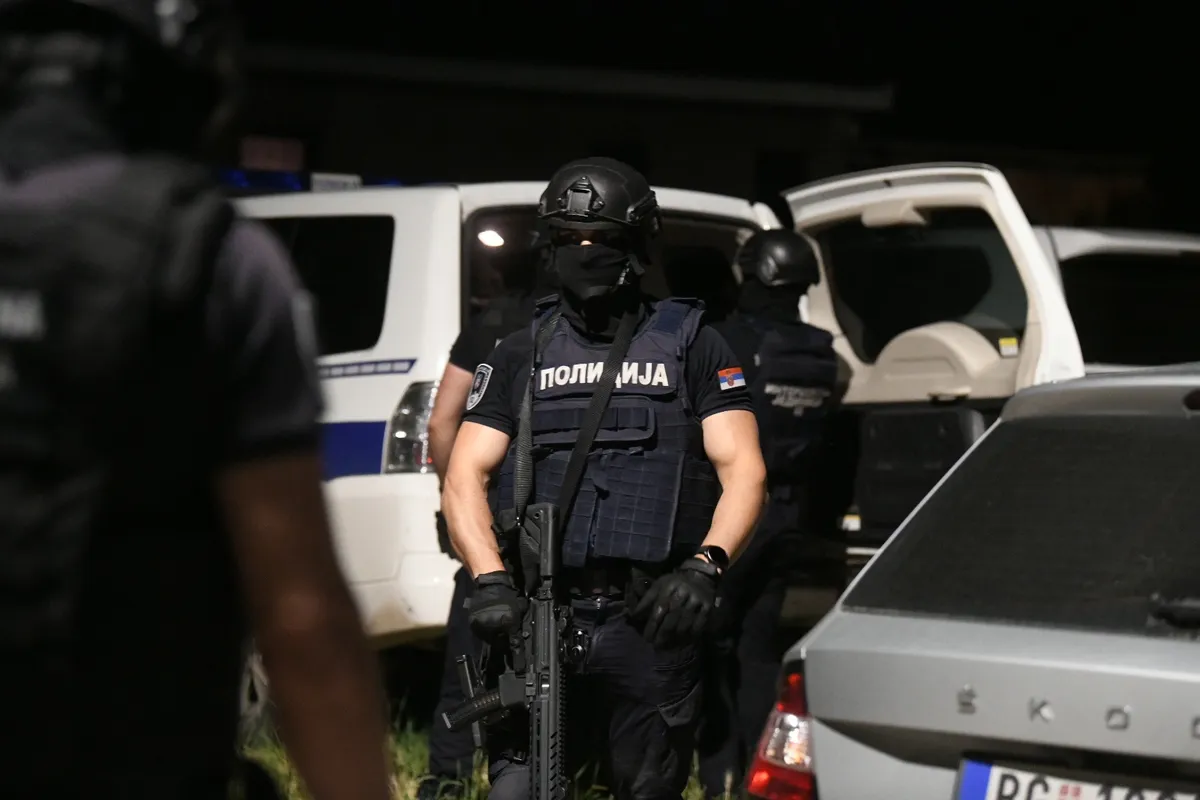
On June 11, N1 reported that deputy commander Mitar J., assistant commander Jugoslav S., and intervention team leader Nenad S. denied the allegations, while Steak and Wine Bar director Darko Z. remained silent during questioning before the Higher Prosecutor's Office. Prosecutors sought custody for Jugoslav S., Nenad S., and Darko Z., house arrest with electronic monitoring for Mitar J., and retired police colonel Slavica Radovanovic called the MUP's work in the Senjak case sloppy and amateurish.
Context: Boske, Senjak, and Autokomanda
N1Custody for the Interventna jedinica 92 commander and the intervention team leader over the obstruction of Vukovic's prosecutionN1Prosecutor Lazic: it would be logical for the Supreme Public Prosecutor's Office to review the work of the Higher Prosecutor's Office in the Senjak caseN1Three Interventna jedinica 92 officers and the restaurant director were questioned; custody was requestedN1Radovanovic: MUP's operational work in the Senjak murder investigation was sloppy and amateurishKurirDetained Interventna officers were questioned, denied covering up the shooting, and were remanded for up to 30 days
Open news item
On June 11, minister Dubravka Djedovic Handanovic said Serbia had completed its part of the arrangement with MOL over NIS, but that an agreement between Gazprom Neft and MOL and US approval were still needed. By evening, N1 and Danas added expert framing: the extra five percent of shares does not itself create control without changing NIS's statute, while the current OFAC license expires on June 16.
Context: NIS and sanctions
N1Serbia and MOL reached a deal: will it become known what is written in the shareholder agreementN1Djedovic Handanovic: next comes the Gazprom Neft-MOL agreement, then approval by the US administrationDanasDjedovic Handanovic on the deal with MOL: we have finished our part, now everything is in the hands of the Russian and Hungarian sideN1N1 guests: what the compromise in MOL-Serbia talks meansDanasSerbia-MOL deal: the state touts an extra five percent of shares, but they mean nothing without changing NIS's statute
Open news item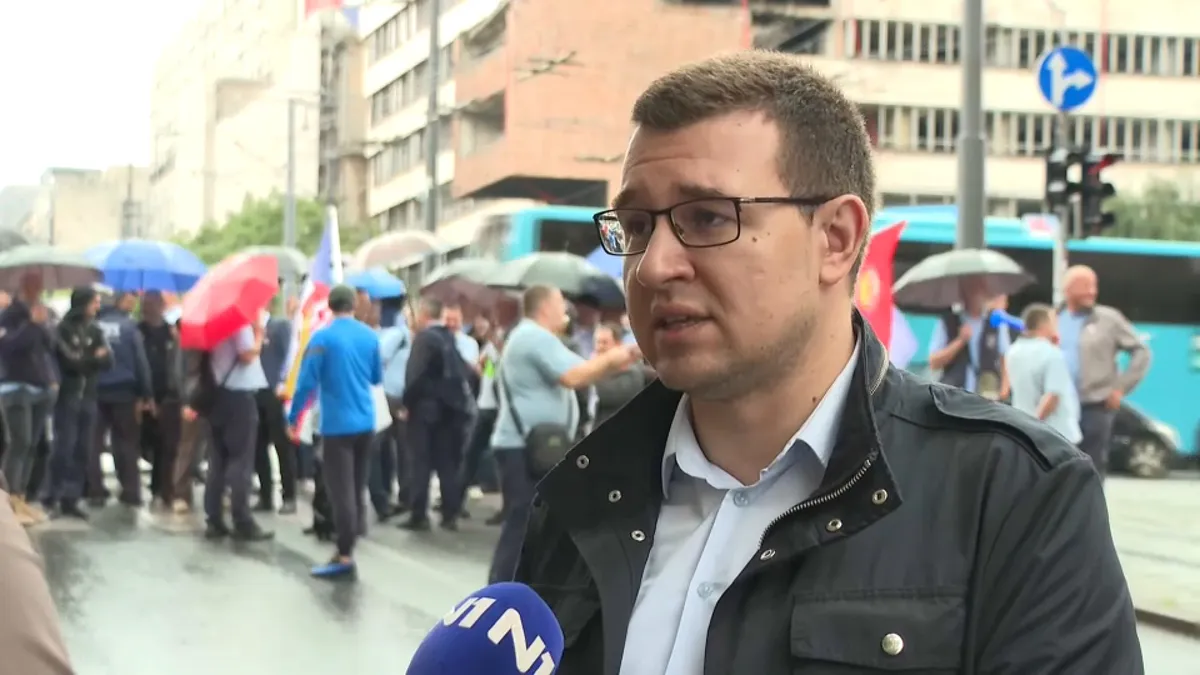
On June 11, GSP workers marched from Trg Nikole Pasica to the Serbian government, saying the city and the public transport secretariat had ignored their previous demands. For Belgrade residents, the practical stakes are the future of GSP routes, the purchase of buses and trolleybuses, and the tender for a public-private transport partnership.
Context
Long-running stories with updates
Stories
NIS and sanctions
NIS is Serbia's key oil company and the operator of the Pančevo refinery. This story follows how sanctions against the Russian stake in the company affect fuel supplies, Serbia's talks with MOL, Gazprom Neft, and the United States, and control over strategic infrastructure.
- On 5 August, the ministry said low Danube levels were making fuel-product supplies difficult. NIS expects to raise crude processing in the second half of August from about 9,500 to about 13,000 tonnes a day; the authorities plan to allow about 23,000 tonnes of operational reserves to be used by other oil companies. Imports of about 20,000 tonnes of diesel by water remain uncertain.
- On 2 August, Aleksandar Vučić warned that the Pančevo refinery might have to pause temporarily if the Danube keeps falling. On 3 August, N1 reported that the refinery was operating normally, the river level was not yet affecting production, and savings measures were being applied in other processes. No refinery shutdown has been announced.
- OFAC extended NIS’s operating licence, MOL’s licence to negotiate with Gazprom Neft over the Russian stake, and JANAF’s licence to transport oil for NIS until 28 August 2026; this preserves the company’s operations and crude-oil refining, but no final ownership agreement has been announced.
- The Serbia-MOL agreement signed on June 16 takes effect only if MOL acquires 56.15 percent of NIS and OFAC approves the transaction; under that framework Serbia is to acquire another five percent and raise its stake to about 35 percent, while MOL would hold control with 51.15 percent.
- The agreement provides for at least ten years of operations at the Pančevo refinery at capacity comparable to the four-year pre-sanctions average and uninterrupted operations at Petrohemija.
- On July 26 Aleksandar Vučić named the end of September as a target for technical completion. It is an expectation, not an announced signed deal; the immediate open questions are the terms of a Russian-stake transaction and operations after 28 August.
Timeline
How the story developed
Serbia privatized NIS and the controlling stake moved to the Russian side. From that point on, ownership in NIS became not only a business question but also part of Serbia's relations with Russia, the EU, and the United States.
US sanctions against NIS became a practical threat to the company's operations and required special OFAC licenses so that NIS could continue operating while a solution on ownership was being sought.
MOL and Gazprom Neft announced a preliminary framework for the purchase of 56.15 percent of NIS, but the transaction remained dependent on OFAC, regulatory approvals, and a final sale contract.
Serbia and MOL announced a compromise on the shareholder agreement: Serbia gets additional governance rights, the Pančevo refinery is supposed to keep operating, and the key immediate deadline remains June 16, 2026. Later the minister clarified that Serbia had completed its part, but the deal now depends on Gazprom Neft, MOL, and the United States; evening N1 and Danas items stressed that without a statute change, the extra five percent of shares is not the same as control.
Forbes/N1 checked Ranko Mimović's company, which Reuters had linked on May 6 to a EUR 2 billion offer to buy NIS. KFT Senator Treasury G.T.7 Dva had its account blocked six times in half a year at the Tax Administration's initiative, and on May 28 a first court dispute for RSD 98,496 was opened against it; this deepened doubts around alternative Serbian offers for NIS.
021, citing RTS, carried Jelica Putniković's assessment that the key decision is expected on Tuesday, June 16, when existing NIS licenses expire. She tied the outcome to OFAC consent, concrete contracts, possible governance changes, and the future of the Pančevo refinery.
Serbia and MOL signed a shareholder agreement on the future management of NIS. It depends on MOL's final deal with Gazprom Neft for 56.15 percent of NIS and OFAC approval; the same day Vučić said he expects the NIS license to be extended by 15 days.
Dubravka Đedović Handanović said that after the agreement with MOL, the Serbian side has completed its part of the talks, while the final NIS sale now depends on Gazprom Neft, MOL, and whether the solution is acceptable to OFAC.
021 reported that OFAC extended NIS's operating license and MOL's license for negotiations on buying the Russian stake until July 1, temporarily preserving the company's operations and oil refining after the previous June 16 deadline.
Danas reported that on July 1 NIS's operating license for importing oil via JANAF and the Gazprom Neft-MOL negotiation license expire; NIS filed a new request, while Serbia's authorities told the IMF they have fallback executive and legal measures if talks fail. N1 later added that the talks are unfolding amid Hungarian political-legal risks around MOL: the European arrest warrant for Zsolt Hernadi remains valid, and MOL's excess-profit tax is being expanded.
The US extended NIS's operating license for another 30 days, until July 31. According to Danas/BBC and Novosti, this keeps the company operating, fuel supplies flowing, and crude oil processing continuing at the Pančevo refinery; later, N1 and Danas added that JANAF received a license until July 31 for deliveries to NIS, while MOL received a license until July 31, 2026 to continue talks on the majority Russian stake.
OFAC extended NIS’s operating licence, MOL’s licence to negotiate with Gazprom Neft over the Russian majority stake, and JANAF’s licence to transport oil for NIS until 28 August. This keeps crude procurement, deliveries and Pančevo refining running, but does not complete the ownership transaction.
The ministry said the low Danube is complicating fuel-product supplies. NIS expects to increase crude processing in the second half of August from about 9,500 to about 13,000 tonnes a day once already ordered deliveries arrive; the authorities plan to make about 23,000 tonnes of operational reserves available to other companies. Imports of about 20,000 tonnes of diesel by water remain uncertain.
Stories
Boske, Senjak, and Autokomanda
This story connects the shooting at a restaurant on Autokomanda, the arrests of Interventna jedinica 92 officers, the figure of Sasa Vukovic Boske, former Belgrade police chief Veselin Milic, and the separate Senjak branch. It is no longer only a crime chronicle but also a story about how police and prosecutors handle cases involving connected people.
- The Autokomanda branch is about suspicion that some police officers failed to record the shooting properly and helped conceal procedural traces.
- The name of Sasa Vukovic Boske appears as the figure whom, according to the prosecution's version, the authorities did not properly prosecute after the shooting.
- On June 11, N1 reported that the commander of Interventna jedinica 92 and a team leader were placed in custody over obstruction of Vukovic's prosecution.
- On the evening of June 11, N1 reported that Mitar J., Jugoslav S., and Nenad S. denied the allegations, Darko Z. remained silent, and the Higher Prosecutor's Office sought custody for Jugoslav S., Nenad S., and Darko Z. and house arrest with electronic monitoring for Mitar J.
- In comments to N1, former inspector Sinisa Carevic says the restaurant owner's testimony, cameras, cell-site data, and phone contacts will matter.
- Retired police colonel Slavica Radovanovic called MUP's work in the Senjak murder investigation sloppy and amateurish and tied the problem to the leadership of the Criminal Police Directorate.
- The Senjak branch remains a separate but closely related story about a shooting, the killing of Aleksandar Nesovic, and complaints of police violence during questioning.
- Prosecutor Nenad Lazic told N1 that it would be logical to review the work of the Higher Prosecutor's Office in the Senjak case at the level of the Supreme Public Prosecutor's Office.
- On June 12, Novosti reported that the Higher Court in Belgrade extended custody for Veselin Milic for up to 30 days, and also extended custody for Sasa Vukovic, Mario S., Danka V., Nenad L., Dejan S., and Jasna Z. in the Aleksandar Nesovic Baja murder case.
- On June 13, 021 carried the Higher Prosecutor's Office explanation: the part of the complaint against Milic alleging assistance to the perpetrator after the crime was dismissed because further evidence and testimony did not confirm that he called Nesovic to come without security, was in the restaurant at the time of the killing, or removed traces.
- On June 13, prosecutors expanded the investigation into Aleksandar Nesovic's killing: Sasa V. and Mario S. are suspected of aggravated murder as co-perpetrators, Danka V. of assisting aggravated murder, and evidentiary actions were ordered against Veselin M. and seven others in the failure-to-report and assistance-after-the-crime branches.
- On June 16, Sasa Vukovic Boske was questioned at the Higher Prosecutor's Office at his own request; lawyer Ivan Simic confirmed that questioning continues on June 17, while details of the statement are not known.
- On June 18, Novosti reported that Vukovic Boske spent two days giving his defense in the presence of three Higher Prosecutor's Office prosecutors over suspicion in the killing of Aleksandar Nesovic Baja at restaurant "27" in Senjak.
- On June 20, VJT ordered the Second Basic Prosecutor's Office to form a case and identify unknown persons who, according to the defense, threatened Veselin Milic in Belgrade district jail; the prison administration said it follows safety procedures for all detainees.
- On July 7, the Higher Court in Belgrade lifted Veselin Milic's custody, leaving him to defend himself from freedom on the failure-to-report branch; lawyers quoted by N1 tie that outcome to exhausted evidentiary steps and to an investigation they view as seriously compromised.
Timeline
How the story developed
According to N1, Danas, Kurir, and Novosti, a shooting incident took place at the Steak and Wine Bar on Autokomanda. The prosecution later said it suspected that some police officers had failed to carry out the necessary steps after the event.
The Senjak branch intensified through reporting on the killing of Aleksandar Nesovic and complaints of police violence during questioning. N1 stressed that prosecutors were not releasing details, citing the protection of the pre-investigation phase.
All four outlets wrote about the arrest of the commander and officers of Interventna jedinica 92. N1 and Danas stressed institutional failure and procedural violations, Kurir personalized the case through the figure of the commander, and Novosti relayed the official prosecutorial position.
N1 reported that the commander of Interventna jedinica 92 and a team leader were placed in custody, and later detailed the questioning of Mitar J., Jugoslav S., Nenad S., and Darko Z. After the questioning, the Higher Prosecutor's Office sought custody for Jugoslav S., Nenad S., and Darko Z., house arrest for Mitar J., while Slavica Radovanovic called MUP's work in the Senjak branch sloppy and amateurish.
Novosti reported that the preliminary-proceedings judge of the Higher Court in Belgrade extended custody for up to 30 days for Veselin Milic, Sasa Vukovic, Mario S., Danka V., Nenad L., Dejan S., and Jasna Z. in the Aleksandar Nesovic Baja murder case.
021 carried the Higher Prosecutor's Office explanation for dismissing part of the complaint against Veselin Milic: subsequent evidence and testimony did not confirm a call inviting Aleksandar Nesovic to come without security, Milic's presence in the restaurant at the time of the killing, or his removal of traces.
Prosecutors expanded the investigation into Aleksandar Nesovic's killing: Sasa V. and Mario S. are suspected of aggravated murder as co-perpetrators, Danka V. of assisting aggravated murder, and evidentiary actions were ordered against Veselin M., Nenad L., Vuk S., Petar U., Dejan S., Jasna Z., Milos J., and Dusan V.
Sasa Vukovic Boske, whom prosecutors describe as the direct perpetrator in Aleksandar Nesovic's killing, was questioned at his own request; lawyer Ivan Simic said the questioning continues on June 17.
Novosti reported that Vukovic Boske spent two days giving his defense before three Higher Prosecutor's Office prosecutors over suspicions in Aleksandar Nesovic Baja's killing at restaurant "27" in Senjak.
After the defense alleged threats to Veselin Milic in Belgrade district jail, VJT ordered the Second Basic Prosecutor's Office to identify unknown persons, while the prison administration said it strictly follows safety procedures for all detainees.
The Higher Court in Belgrade lifted Veselin Milic's custody, moving him to defense from freedom on the branch alleging failure to report Aleksandar Nesovic's killing at restaurant "27" in Senjak. In comments to N1, lawyers Vladimir Terzic and Bozo Prelevic tie that decision to exhausted evidentiary steps and to an investigation they say is already too compromised.