
First published: June 18, 2026 at 08:05 AM
Last update: June 18, 2026 at 08:04 PM
Issue
Issue for June 18, 2026
This is the stable daily issue page at `/digest/2026-06-18/`: all updates for the day are collected in one feed with a verification log.
Last update: June 18, 2026 at 08:04 PMCards: 5Stories: 3
Fresh issue
June 18, 2026
The June 18 issue opens with the Ribnikar verdict: in the repeated trial, Vladimir Kecmanovic received 14 years and 6 months and Miljana Kecmanovic 2 years and 11 months. The issue also adds the VST decision assigning three prosecutors to TOK, the joining of the new Danube bridge structure in Novi Sad, the morning Senjak case update, and a practical Zemun route-change card during works in Vrtlarska Street.
News feed
Issue cards
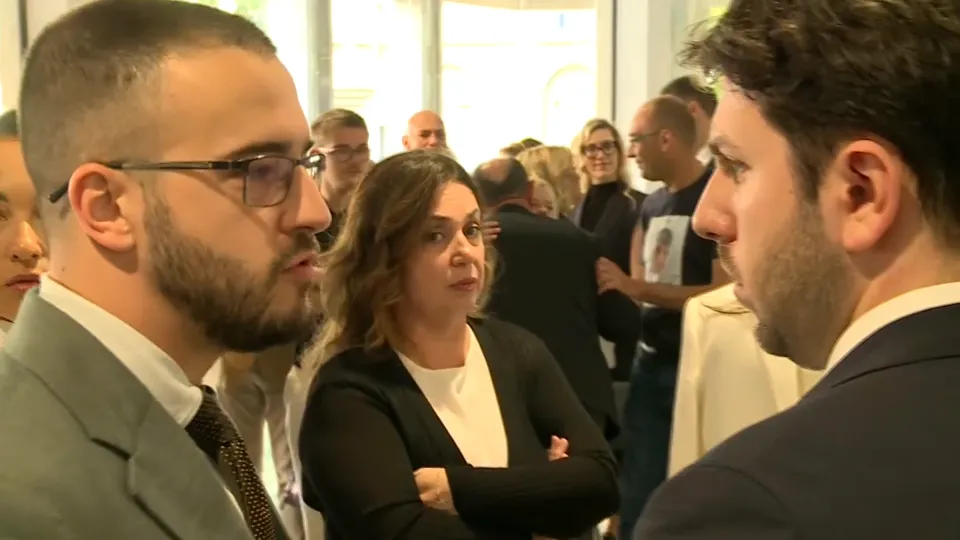
On June 18, the Higher Court in Belgrade sentenced Vladimir Kecmanovic to 14 years and 6 months and Miljana Kecmanovic to 2 years and 11 months in prison in the repeated trial. The first-instance verdict can be appealed before the Court of Appeal.
Context: The Ribnikar Case
N1Parents of the boy who committed the mass killing in Ribnikar sentenced to prison - father gets 14 and a half yearsDanasVerdict delivered: Vladimir Kecmanovic gets 14 and a half years, Miljana Kecmanovic almost three yearsKurirWhy the Kecmanovics were sentenced to a total of 17 years and 5 months: court says Vladimir remains in custody and Miljana has a banNovostiVerdict delivered in the Ribnikar case: here are the sentences for Vladimir and Miljana Kecmanovic
Open news item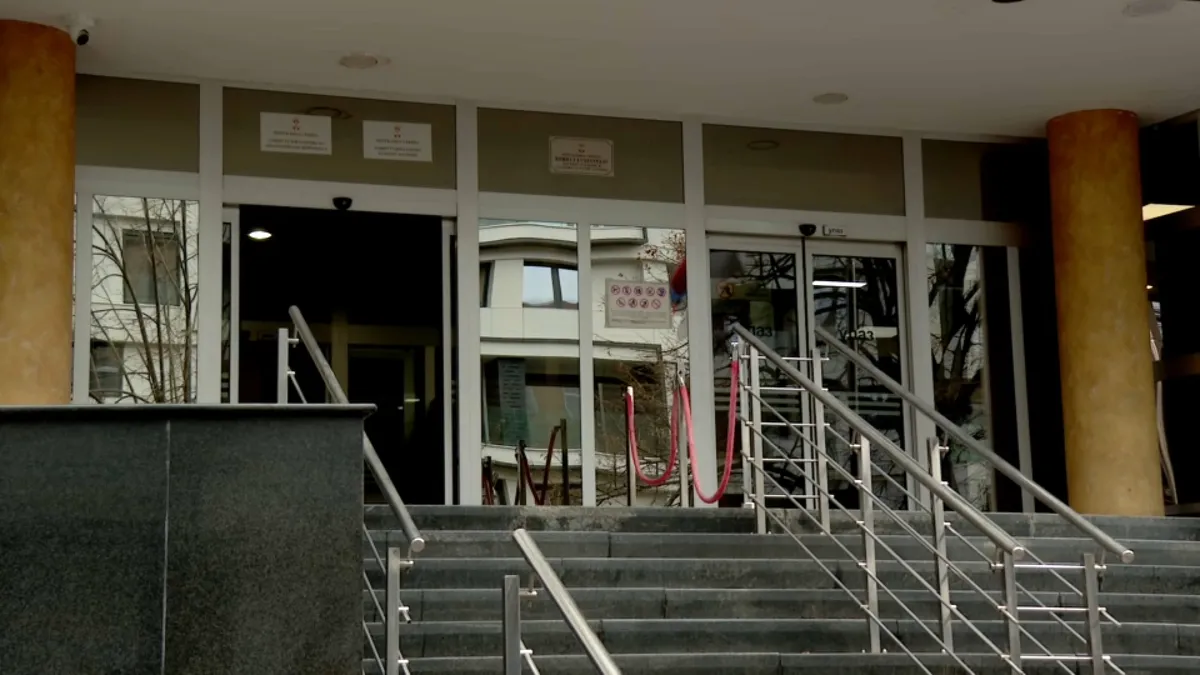
On June 18, the High Prosecutorial Council decided to assign Irena Bjelos, Aleksandar Barac, and Boris Majlat to the Organized Crime Prosecutor's Office for three years. That addresses part of the issue singled out by the Venice Commission in its follow-up opinion on the Mrdic laws: not all prosecutors had been returned to TOK.
Context: Serbia and EU accession
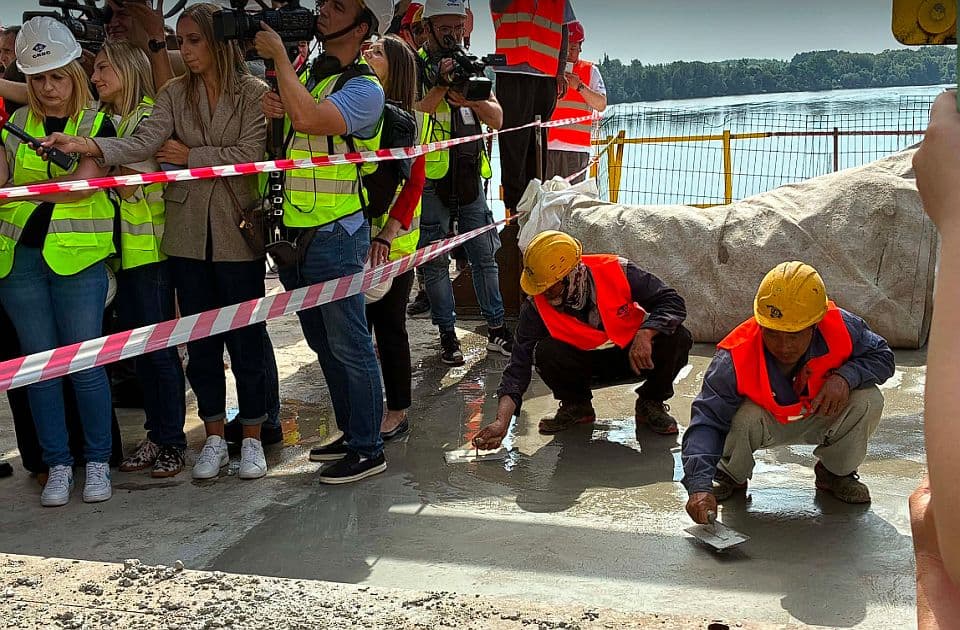
On June 18, the main structure of the new Danube bridge near Petrovaradin was joined on the Fruskogorski Corridor. 021 notes that the bridge with approaches is about 1.7 km long, the central span is 505.75 m, and completion that had been announced for the second half of 2026 is now effectively slipping.
On June 18, Novosti reports that Sasa Vukovic Boske spent two days giving his defense at the Higher Prosecutor's Office in Belgrade over suspicions in the killing of Aleksandar Nesovic Baja at restaurant "27" in Senjak. The update follows N1/Danas reporting that the questioning began on June 16 at his own request.
Context: Boske, Senjak, and Autokomanda
Beoinfo warns that, because of district-heating network works, Vrtlarska Street in Zemun will be closed to traffic from KBC Zemun to the intersection area with Iviceva from June 20 to July 6. Detours affect routes 15, 45, 81, 81L, and 85, with temporary stops introduced on the changed section.
Context
Long-running stories with updates
Stories
Serbia and EU accession
This story tracks Serbia's EU talks, the rule of law, media issues and foreign-policy alignment. In July, at least five EU states opposed opening Cluster 3, the European Commission flagged problems in justice, anti-corruption policy and journalist safety, and Serbia aligned with two of six new EU foreign-policy decisions.
- On July 29, the EU said Serbia aligned with decisions on Lebanon and Sudan but not with four restrictive-measures decisions linked to Russia, cyberattacks and serious human-rights abuses. The other Western Balkan candidates aligned with all four.
- Serbia has not opened new negotiation chapters since December 2021. In July, at least five EU states opposed opening Cluster 3; no new decision to open the cluster has been made.
- The European Commission's July 17 report flags political pressure on courts and prosecutors, an unimplemented part of the anti-corruption plan, problems with REM and worsening journalist safety.
- Four independent REM Council members decided to take up work, but the ninth seat remains vacant. The first vote for chair ended 4-4, so the Council's leadership has not yet been elected.
- Parliament adopted a package of five judicial laws on June 25. The Venice Commission's follow-up opinion found seven of nine recommendations implemented, but the return of two TOK prosecutors and the autonomy of the cybercrime unit were not fully resolved.
- The next checkable milestones are EU-state consensus on Cluster 3, completion and leadership of the REM Council, and resolution of the remaining judicial-reform concerns.
Timeline
How the story developed
Serbia last opened new EU negotiation chapters in December 2021; that fact again became part of the dispute around Cluster 3.
Parliament adopted amendments to five judicial laws on MP Ugljesa Mrdic's proposal; professional groups and the EU later criticized them as a risk to prosecutorial autonomy and judicial independence.
The Venice Commission published an urgent opinion on the January amendments and issued seven key recommendations to address the shortcomings.
The Justice Ministry sent improved working drafts of the judicial-law amendments to parliament for transmission to Venice Commission rapporteurs.
Ana Brnabic said the Venice Commission gave a positive opinion on the package, that the amendments would go to parliament next week, and that she expects Cluster 3 to open soon.
The Venice Commission published its follow-up opinion: Serbia implemented seven of nine recommendations, but two key areas - the return of two organized-crime prosecutors and autonomy for the cybercrime unit - are not fully implemented.
Parliament put amendments to five judicial laws on an extraordinary session agenda, including laws on public prosecution, judges, the High Prosecutorial Council, court and prosecutor territories, and bodies for fighting high-tech crime.
VST decided to assign Irena Bjelos, Aleksandar Barac, and Boris Majlat to TOK for three years; the decision for Bjelos and Barac passed with nine votes in favor and one abstention, while Majlat's passed with eight in favor, one against, and one abstention.
Platforma za evropsku Srbiju informed EU institutions of allegedly different judicial-law texts for the Venice Commission and parliament; the Justice Ministry rejected the claims of differences.
At the extraordinary session on 32 agenda items, parliament debated 37 amendments to the key judicial laws in the Mrdic package. N1 reports that opposition amendments were rejected; the sitting ended at about 18:00 and is scheduled to continue on June 24 at 10:00.
Parliament finished detailed debate on all 32 items of the extraordinary session; voting, including on the judicial-law package, is scheduled for June 25 at 10:00.
Parliament adopted a package of five judicial laws, and the government formed a negotiating team for Serbia's inclusion in the EU 'Roam Like at Home' regime.
Dubravka Valić Nedeljković said four elected REM Council members whose resignations were not verified by parliament are ready to return only with guarantees: the ninth member should be chosen after national-council elections, and Ištvan Bodžoni should not be on the candidate harmonization list.
RFE/RL/N1/Danas reported that the Netherlands officially opposes opening Cluster 3 with Serbia, while diplomatic sources say at least five EU states oppose it, including three Baltic states and Sweden.
Four independent REM Council members said they decided to take up work after parliament adopted an authentic interpretation of the Electronic Media Law; their earlier resignation statements were interpreted as having no independent legal effect because they had not taken office.
The European Parliament's official X account posted its position on the rule of law, democratic standards, free and fair elections, and normalization of relations with Kosovo. The post was not a new negotiating decision.
European Parliament rapporteur Tonino Picula told N1 that the preparation, conduct, and aftermath of future elections would be an important criterion in assessing Brussels' relations with Belgrade. He also judged opening Cluster 3 unlikely; this is his assessment, not a new EU decision.
The European Commission published Serbia's chapter in its annual Rule of Law Report. It cites political pressure on courts and prosecutors, problems with implementing the anti-corruption plan, REM, and journalist safety; it is not a decision to open a negotiation cluster.
Stories
Boske, Senjak, and Autokomanda
This story connects the shooting at a restaurant on Autokomanda, the arrests of Interventna jedinica 92 officers, the figure of Sasa Vukovic Boske, former Belgrade police chief Veselin Milic, and the separate Senjak branch. It is no longer only a crime chronicle but also a story about how police and prosecutors handle cases involving connected people.
- The Autokomanda branch is about suspicion that some police officers failed to record the shooting properly and helped conceal procedural traces.
- The name of Sasa Vukovic Boske appears as the figure whom, according to the prosecution's version, the authorities did not properly prosecute after the shooting.
- On June 11, N1 reported that the commander of Interventna jedinica 92 and a team leader were placed in custody over obstruction of Vukovic's prosecution.
- On the evening of June 11, N1 reported that Mitar J., Jugoslav S., and Nenad S. denied the allegations, Darko Z. remained silent, and the Higher Prosecutor's Office sought custody for Jugoslav S., Nenad S., and Darko Z. and house arrest with electronic monitoring for Mitar J.
- In comments to N1, former inspector Sinisa Carevic says the restaurant owner's testimony, cameras, cell-site data, and phone contacts will matter.
- Retired police colonel Slavica Radovanovic called MUP's work in the Senjak murder investigation sloppy and amateurish and tied the problem to the leadership of the Criminal Police Directorate.
- The Senjak branch remains a separate but closely related story about a shooting, the killing of Aleksandar Nesovic, and complaints of police violence during questioning.
- Prosecutor Nenad Lazic told N1 that it would be logical to review the work of the Higher Prosecutor's Office in the Senjak case at the level of the Supreme Public Prosecutor's Office.
- On June 12, Novosti reported that the Higher Court in Belgrade extended custody for Veselin Milic for up to 30 days, and also extended custody for Sasa Vukovic, Mario S., Danka V., Nenad L., Dejan S., and Jasna Z. in the Aleksandar Nesovic Baja murder case.
- On June 13, 021 carried the Higher Prosecutor's Office explanation: the part of the complaint against Milic alleging assistance to the perpetrator after the crime was dismissed because further evidence and testimony did not confirm that he called Nesovic to come without security, was in the restaurant at the time of the killing, or removed traces.
- On June 13, prosecutors expanded the investigation into Aleksandar Nesovic's killing: Sasa V. and Mario S. are suspected of aggravated murder as co-perpetrators, Danka V. of assisting aggravated murder, and evidentiary actions were ordered against Veselin M. and seven others in the failure-to-report and assistance-after-the-crime branches.
- On June 16, Sasa Vukovic Boske was questioned at the Higher Prosecutor's Office at his own request; lawyer Ivan Simic confirmed that questioning continues on June 17, while details of the statement are not known.
- On June 18, Novosti reported that Vukovic Boske spent two days giving his defense in the presence of three Higher Prosecutor's Office prosecutors over suspicion in the killing of Aleksandar Nesovic Baja at restaurant "27" in Senjak.
- On June 20, VJT ordered the Second Basic Prosecutor's Office to form a case and identify unknown persons who, according to the defense, threatened Veselin Milic in Belgrade district jail; the prison administration said it follows safety procedures for all detainees.
- On July 7, the Higher Court in Belgrade lifted Veselin Milic's custody, leaving him to defend himself from freedom on the failure-to-report branch; lawyers quoted by N1 tie that outcome to exhausted evidentiary steps and to an investigation they view as seriously compromised.
Timeline
How the story developed
According to N1, Danas, Kurir, and Novosti, a shooting incident took place at the Steak and Wine Bar on Autokomanda. The prosecution later said it suspected that some police officers had failed to carry out the necessary steps after the event.
The Senjak branch intensified through reporting on the killing of Aleksandar Nesovic and complaints of police violence during questioning. N1 stressed that prosecutors were not releasing details, citing the protection of the pre-investigation phase.
All four outlets wrote about the arrest of the commander and officers of Interventna jedinica 92. N1 and Danas stressed institutional failure and procedural violations, Kurir personalized the case through the figure of the commander, and Novosti relayed the official prosecutorial position.
N1 reported that the commander of Interventna jedinica 92 and a team leader were placed in custody, and later detailed the questioning of Mitar J., Jugoslav S., Nenad S., and Darko Z. After the questioning, the Higher Prosecutor's Office sought custody for Jugoslav S., Nenad S., and Darko Z., house arrest for Mitar J., while Slavica Radovanovic called MUP's work in the Senjak branch sloppy and amateurish.
Novosti reported that the preliminary-proceedings judge of the Higher Court in Belgrade extended custody for up to 30 days for Veselin Milic, Sasa Vukovic, Mario S., Danka V., Nenad L., Dejan S., and Jasna Z. in the Aleksandar Nesovic Baja murder case.
021 carried the Higher Prosecutor's Office explanation for dismissing part of the complaint against Veselin Milic: subsequent evidence and testimony did not confirm a call inviting Aleksandar Nesovic to come without security, Milic's presence in the restaurant at the time of the killing, or his removal of traces.
Prosecutors expanded the investigation into Aleksandar Nesovic's killing: Sasa V. and Mario S. are suspected of aggravated murder as co-perpetrators, Danka V. of assisting aggravated murder, and evidentiary actions were ordered against Veselin M., Nenad L., Vuk S., Petar U., Dejan S., Jasna Z., Milos J., and Dusan V.
Sasa Vukovic Boske, whom prosecutors describe as the direct perpetrator in Aleksandar Nesovic's killing, was questioned at his own request; lawyer Ivan Simic said the questioning continues on June 17.
Novosti reported that Vukovic Boske spent two days giving his defense before three Higher Prosecutor's Office prosecutors over suspicions in Aleksandar Nesovic Baja's killing at restaurant "27" in Senjak.
After the defense alleged threats to Veselin Milic in Belgrade district jail, VJT ordered the Second Basic Prosecutor's Office to identify unknown persons, while the prison administration said it strictly follows safety procedures for all detainees.
The Higher Court in Belgrade lifted Veselin Milic's custody, moving him to defense from freedom on the branch alleging failure to report Aleksandar Nesovic's killing at restaurant "27" in Senjak. In comments to N1, lawyers Vladimir Terzic and Bozo Prelevic tie that decision to exhausted evidentiary steps and to an investigation they say is already too compromised.
Stories
The Ribnikar Case
A mass shooting took place at Belgrade's Vladislav Ribnikar school on May 3, 2023. Because the shooter was younger than 14, the central issues became parental responsibility, gun storage, the role of the school, and the state's response; on June 18, 2026, the repeated trial against K.K.'s parents ended with a first-instance guilty verdict.
- On June 18, 2026, the Higher Court in Belgrade sentenced Vladimir Kecmanovic to 14 years and 6 months in prison and Miljana Kecmanovic to 2 years and 11 months in the repeated trial.
- Vladimir Kecmanovic was found guilty of a grave offense against public safety and neglect and abuse of a minor; Miljana Kecmanovic was found guilty of neglect and abuse of a minor.
- The court extended Miljana Kecmanovic's ban on approaching, meeting, or communicating with witness K.K. until she is sent to serve the sentence, and confiscated Vladimir's weapons and ammunition listed in the verdict.
- The verdict is first-instance: participants in the proceedings may appeal, after which the Belgrade Court of Appeal will review the decision.
- Prosecutors had sought 14 years and 11 months for Vladimir and three years for Miljana, while the defense sought acquittals.
Timeline
How the story developed
A student opened fire at Belgrade's Vladislav Ribnikar school. Nine pupils and a security guard were killed, others were wounded, and in the first days the media focused on the planning of the attack, the father's weapons, and the fact that the shooter was too young for adult criminal liability.
After the tragedy, Serbia declared mourning, debated gun control and school safety measures, and then saw the start of the Serbia Against Violence protests, which directed demands at the state, regulators, and media.
The case split into several branches: criminal charges against the parents and related figures, civil suits by families, and questions of responsibility for the school and the state. That means each new article has to be read in the context of which branch of the process it actually concerns.
N1 recorded the prosecution's position on the sentences for Vladimir Kecmanovic and the mother, Danas updated the story through the words of a murdered girl's mother, and Kurir and Novosti put details of the final phase into their headlines. The case thus moved into waiting for the verdict.
Kurir separately reported that the verdict in the Ribnikar case is scheduled for June 18. That date becomes the next point that families, the court, and the media will watch.
The Higher Court in Belgrade sentenced Vladimir Kecmanovic to 14 years and 6 months and Miljana Kecmanovic to 2 years and 11 months in the repeated trial; the first-instance verdict can be appealed.