
First published: June 25, 2026 at 08:07 AM
Last update: June 25, 2026 at 09:08 PM
Issue
Issue for June 25, 2026
This is the stable daily issue page at `/digest/2026-06-25/`: all updates for the day are collected in one feed with a verification log.
Last update: June 25, 2026 at 09:08 PMCards: 9Stories: 1
Fresh issue
June 25, 2026
In the June 25 issue: parliament adopted the judicial-law package from a 32-item agenda; the 'sound cannon' dispute gained a legal critique of the 'simulation' theory and a doctors' response; BIRN/Spiegel published documents on Jerg Heskens, the GIZ partnership, and the Jadar project; RHMZ warns of heat from June 26 to July 2; 021 reports a water outage in part of Novi Sad; in Belgrade, SNS-rally closures from June 26 to 29 are added to work-related transport changes; Belgrade adopted its second 2026 budget rebalance and several urban plans, including the disputed Bajdina/Mirijevo plan; the vocational-school forum says lower final-exam results must not be ignored; the government formed a team for EU 'Roam Like at Home' talks.
News feed
Issue cards
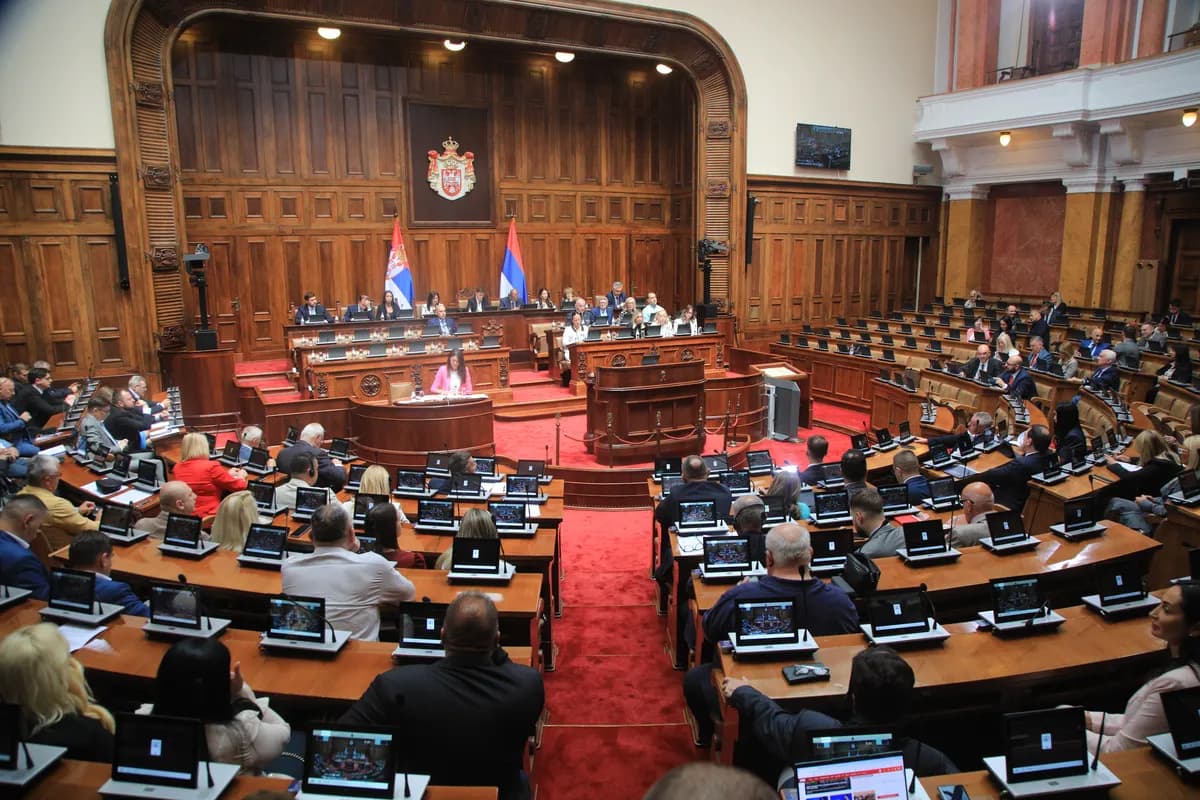
On June 25, parliament adopted amendments to laws on public prosecution, judges, the High Prosecutorial Council, court and prosecutor territories, and bodies for fighting high-tech crime. Those five judicial laws were part of voting on 32 items, alongside transplantation, support for young first-home buyers, international agreements, and state guarantees for Srbijagas.
Context: Serbia and EU accession
On June 25, the dispute now has several layers: Dacic says LRAD devices exist but were not used in Serbia; former VBA director Momir Stojanovic sees the searches and forensic checks of Aleksandar Radic's equipment as misuse of military structures; lawyer Jugoslav Tintor told N1 that 'simulation' without force or threat is not terrorism; Danas cites doctors and medical-law experts who say examining citizens who reported symptoms after March 15 was a legal duty.
DanasDacic: Claims that I admitted use of a sound cannon are a brutal misuse021Former VBA director: Three reasons the authorities are launching the sound-cannon procedureN1Tintor: Even if sound-cannon use was simulated, students could not thereby attack the constitutional orderDanasVJT announces proceedings against doctors over the 'sound cannon': what does the profession say?KurirDacic: Using my argument with the British minister as a sound-cannon admission is brutal misuseNovostiBrnabic: Bozovic only wants to misuse the sound-cannon invention against Serbia
Open news itemOn June 25, BIRN and Spiegel published an investigation into Jerg Heskens, who has worked alongside Aleksandar Vucic since 2013 and has been paid through a German GIZ partnership since 2020. According to the documents, cooperation with German structures focused on the Jadar lithium project even after the formal 2022 halt: Berlin allocated about EUR 4.9 million to support the project, and a 2025 report referred to construction planned for summer 2026 and extraction in late 2028 or early 2029.
Through several outlets, RHMZ is warning of a mostly sunny and very warm June 25: Serbia should see 31-35 °C, Belgrade around 34 °C, with short showers and thunderstorms possible in hilly and mountain areas of the south and east. In a warning carried by Danas, RHMZ sets the heat period from June 26 to July 2: 32-36 °C on June 26, then 35-39 °C in most places; doctors advise more fluids, avoiding the hottest hours, and not setting air conditioning too low.
N1Sunny and very warm weather, temperatures up to 35 degreesDanasWeather today sunny, up to 35 degreesNovostiSunny and warm today: thunderstorms possible in these parts of SerbiaDanasShowers, then a heat wave and 38 degrees: doctors advise how to protect yourself from sudden weather changesDanasRHMZ warning: how long will the heat wave last?
Open news itemOn June 25, 021 published a short service notice: because of an incident, Ulica Narodnog fronta and nearby streets in Novi Sad are expected to be without water until 14:00. This is practical city information for residents of the area, not a national story.
On June 25, Beoinfo published service notices for works from June 26 to July 2: trolleybus 21 is temporarily suspended around Uciteljska/Marcanska, and bus 42 is rerouted in Rakovica. Danas, citing the Secretariat for Public Transport, reports that because of the SNS rally parts of central Belgrade close from 04:00 on June 26 to 04:00 on June 29; on June 27 from 15:00 until the end of the event, trams 2L, 7L, 8, 9L, 10, 12, 14 and trolleybuses 19, 21, 22, 28, 29 are canceled, while tram 6 is shortened.
Beoinfo / City of BelgradePublic transport regime during works in Uciteljska and Marcanska streetsBeoinfo / City of BelgradeInformation on the changed operating regime of line 42DanasStreet closures for the SNS rally in Belgrade from June 26 to 29GSP BeogradGSP: active service-regime changes
Open news itemOn June 25, the government formed a negotiating team to include Serbia in the EU's 'Roam Like at Home' regime. If negotiations with the European Commission lead to an agreement and rule alignment, residents and businesses could use mobile services more cheaply while staying in EU countries.
Context: Serbia and EU accession
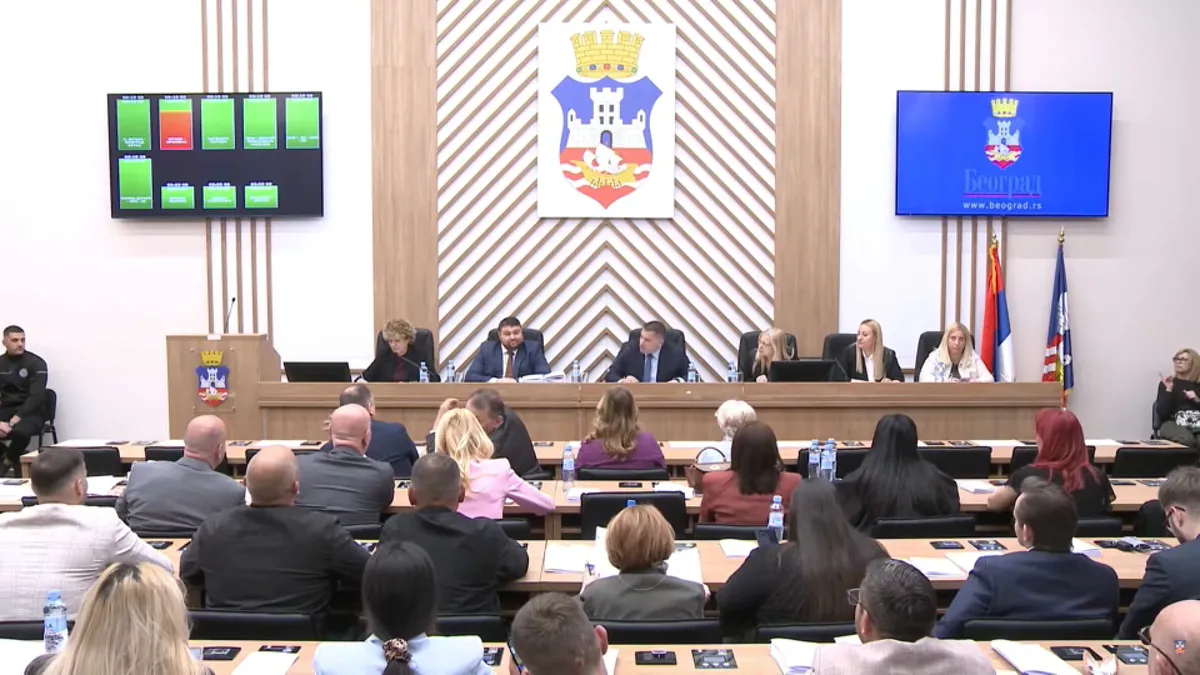
On June 25, the Belgrade City Assembly adopted its second 2026 budget rebalance: the new budget amount is set at RSD 202,155,731,190, with 59 councilors voting in favor and the opposition not voting. The same session adopted several detailed regulation plans, including Mirijevo and the disputed plan for the Bajdina forest area in Zvezdara; Danas reports that residents from the "Mirijevo - zeleno i zdravo" initiative came to the session against the plan, and opposition councilors shielded activists after security moved in at the speaker's podium.
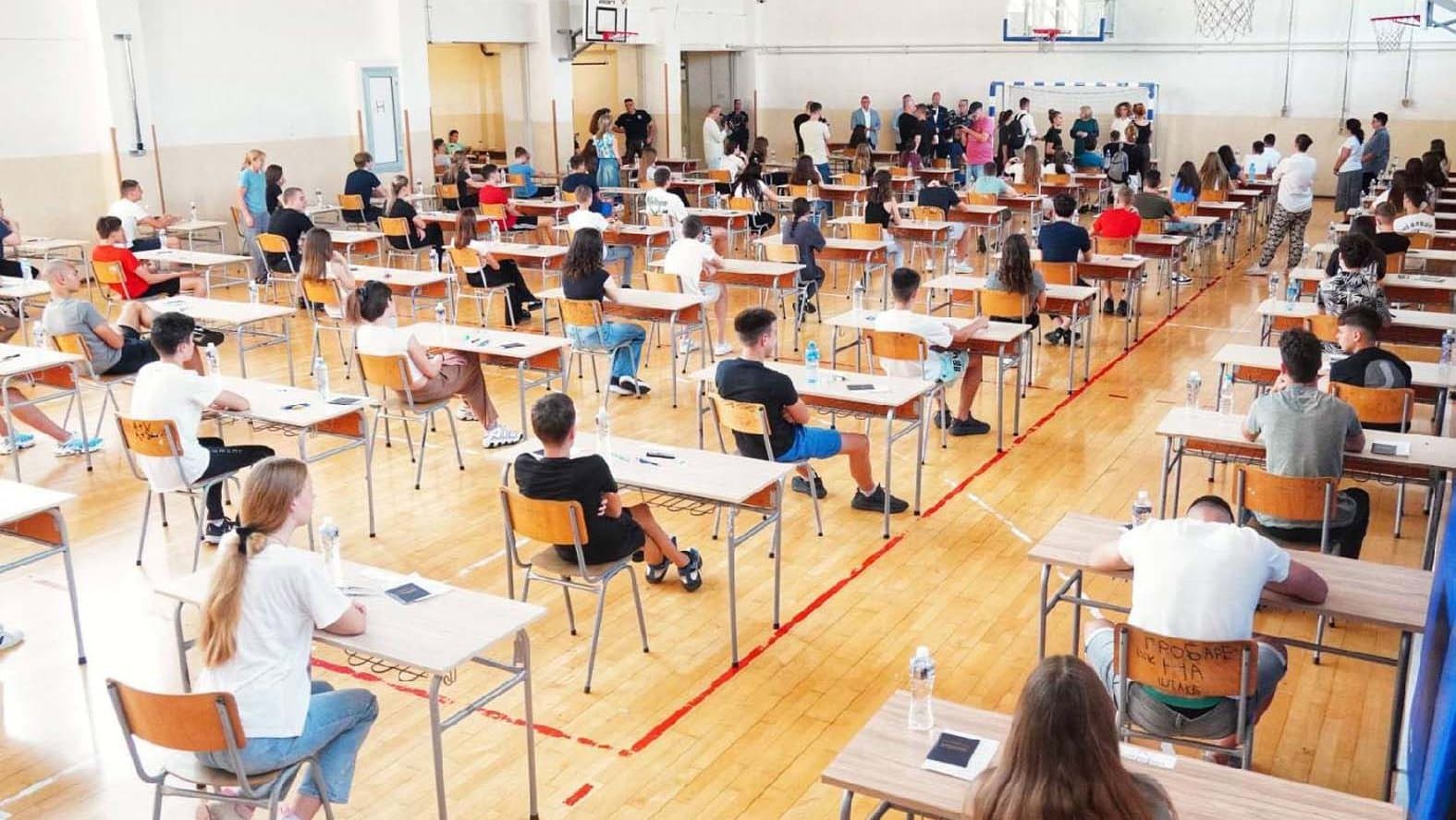
The Forum of Secondary Vocational Schools said on June 25 that the average mother-tongue score in the final primary-school exam was 10.67 points, down 0.88 points from the previous school year. The organization says the decline should not be ignored and calls for a review of curricula, grading criteria, and pupils' functional literacy.
Context
Long-running stories with updates
Stories
Serbia and EU accession
This story tracks Serbia's EU talks, the rule of law, media issues and foreign-policy alignment. In July, at least five EU states opposed opening Cluster 3, the European Commission flagged problems in justice, anti-corruption policy and journalist safety, and Serbia aligned with two of six new EU foreign-policy decisions.
- On July 29, the EU said Serbia aligned with decisions on Lebanon and Sudan but not with four restrictive-measures decisions linked to Russia, cyberattacks and serious human-rights abuses. The other Western Balkan candidates aligned with all four.
- Serbia has not opened new negotiation chapters since December 2021. In July, at least five EU states opposed opening Cluster 3; no new decision to open the cluster has been made.
- The European Commission's July 17 report flags political pressure on courts and prosecutors, an unimplemented part of the anti-corruption plan, problems with REM and worsening journalist safety.
- Four independent REM Council members decided to take up work, but the ninth seat remains vacant. The first vote for chair ended 4-4, so the Council's leadership has not yet been elected.
- Parliament adopted a package of five judicial laws on June 25. The Venice Commission's follow-up opinion found seven of nine recommendations implemented, but the return of two TOK prosecutors and the autonomy of the cybercrime unit were not fully resolved.
- The next checkable milestones are EU-state consensus on Cluster 3, completion and leadership of the REM Council, and resolution of the remaining judicial-reform concerns.
Timeline
How the story developed
Serbia last opened new EU negotiation chapters in December 2021; that fact again became part of the dispute around Cluster 3.
Parliament adopted amendments to five judicial laws on MP Ugljesa Mrdic's proposal; professional groups and the EU later criticized them as a risk to prosecutorial autonomy and judicial independence.
The Venice Commission published an urgent opinion on the January amendments and issued seven key recommendations to address the shortcomings.
The Justice Ministry sent improved working drafts of the judicial-law amendments to parliament for transmission to Venice Commission rapporteurs.
Ana Brnabic said the Venice Commission gave a positive opinion on the package, that the amendments would go to parliament next week, and that she expects Cluster 3 to open soon.
The Venice Commission published its follow-up opinion: Serbia implemented seven of nine recommendations, but two key areas - the return of two organized-crime prosecutors and autonomy for the cybercrime unit - are not fully implemented.
Parliament put amendments to five judicial laws on an extraordinary session agenda, including laws on public prosecution, judges, the High Prosecutorial Council, court and prosecutor territories, and bodies for fighting high-tech crime.
VST decided to assign Irena Bjelos, Aleksandar Barac, and Boris Majlat to TOK for three years; the decision for Bjelos and Barac passed with nine votes in favor and one abstention, while Majlat's passed with eight in favor, one against, and one abstention.
Platforma za evropsku Srbiju informed EU institutions of allegedly different judicial-law texts for the Venice Commission and parliament; the Justice Ministry rejected the claims of differences.
At the extraordinary session on 32 agenda items, parliament debated 37 amendments to the key judicial laws in the Mrdic package. N1 reports that opposition amendments were rejected; the sitting ended at about 18:00 and is scheduled to continue on June 24 at 10:00.
Parliament finished detailed debate on all 32 items of the extraordinary session; voting, including on the judicial-law package, is scheduled for June 25 at 10:00.
Parliament adopted a package of five judicial laws, and the government formed a negotiating team for Serbia's inclusion in the EU 'Roam Like at Home' regime.
Dubravka Valić Nedeljković said four elected REM Council members whose resignations were not verified by parliament are ready to return only with guarantees: the ninth member should be chosen after national-council elections, and Ištvan Bodžoni should not be on the candidate harmonization list.
RFE/RL/N1/Danas reported that the Netherlands officially opposes opening Cluster 3 with Serbia, while diplomatic sources say at least five EU states oppose it, including three Baltic states and Sweden.
Four independent REM Council members said they decided to take up work after parliament adopted an authentic interpretation of the Electronic Media Law; their earlier resignation statements were interpreted as having no independent legal effect because they had not taken office.
The European Parliament's official X account posted its position on the rule of law, democratic standards, free and fair elections, and normalization of relations with Kosovo. The post was not a new negotiating decision.
European Parliament rapporteur Tonino Picula told N1 that the preparation, conduct, and aftermath of future elections would be an important criterion in assessing Brussels' relations with Belgrade. He also judged opening Cluster 3 unlikely; this is his assessment, not a new EU decision.
The European Commission published Serbia's chapter in its annual Rule of Law Report. It cites political pressure on courts and prosecutors, problems with implementing the anti-corruption plan, REM, and journalist safety; it is not a decision to open a negotiation cluster.