
Deliblatska Sands wildfire
This story tracks the major wildfire in Deliblatska Sands: the affected area, risks to settlements, and containment efforts.
What matters
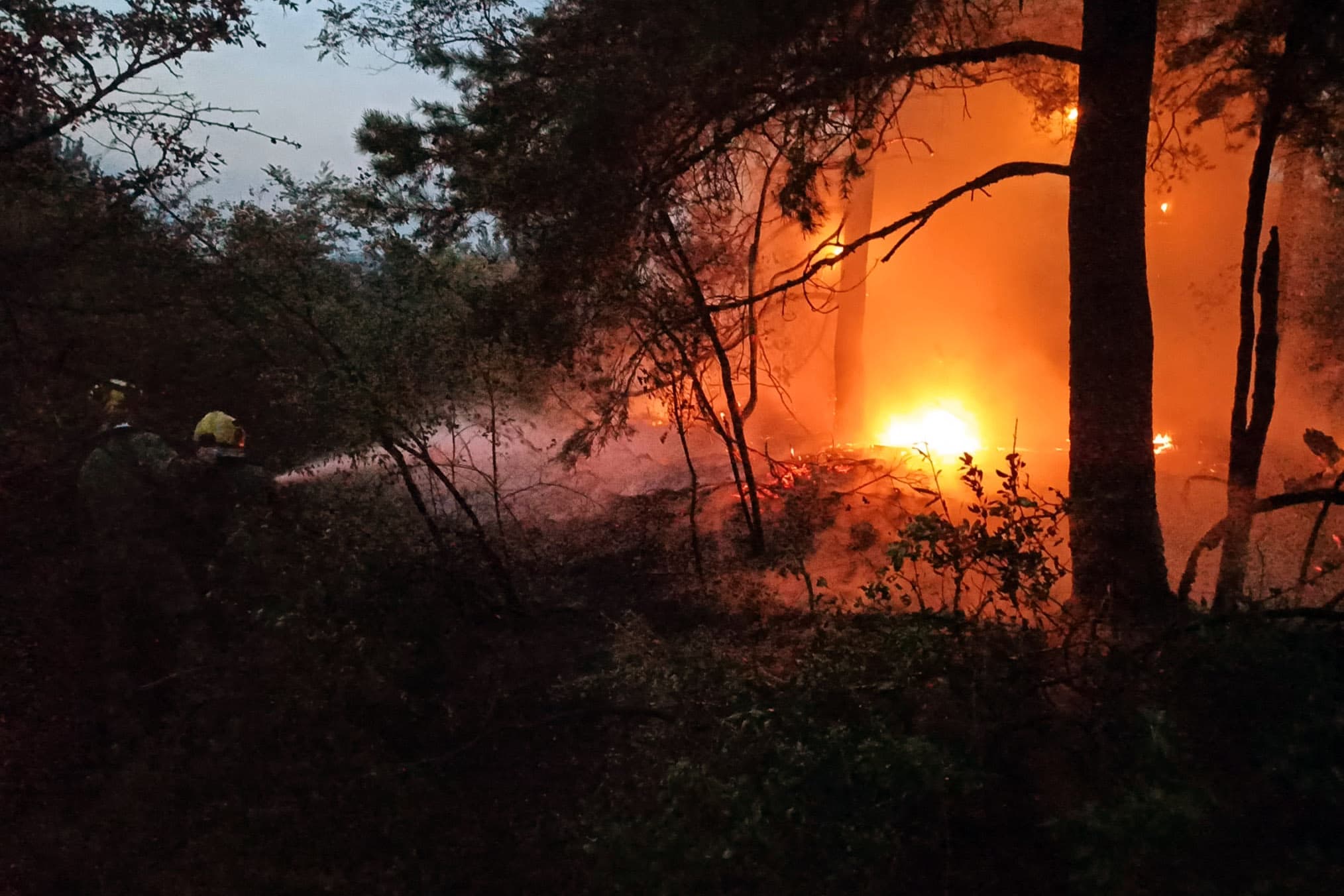
On the evening of 24 August, N1 reported from the scene that conditions in Deliblatska Sands were stable but challenging: wind was complicating firefighting and smoke remained heavy. The fire has lasted more than a month, with EU assistance and a Russian Il-76 involved.
Photo from the firefighting operation
Chronology
Serbia wildfires: conditions steadier in Deliblatska Sands, but wind and smoke hinder firefighting
N1 reports that conditions in Deliblatska Sands are stable but challenging this evening: wind is complicating firefighting and smoke remains heavy. The fire has lasted more than a month, with EU assistance and a Russian Il-76 involved.
Serbia wildfires: Deliblatska Sands remains the most difficult area
In an N1 update at 18:47, the situation in Deliblatska Sands remained difficult but stable: small fires and smouldering were reported deep in the forest, while Romanian firefighters said the terrain makes the fire hard to extinguish. Four EU helicopters, a Russian Il-76 and ground teams are involved.
Deliblatska Sands fire affects more than 3,500 hectares
A major fire is continuing in Deliblatska Sands: the update cites more than 3,500 affected hectares and over 330 people involved in firefighting. Strong wind is rekindling hotspots, but settlements are not threatened.
Deliblatska Sands wildfire affects about 2,000 hectares
The Interior Ministry says the Deliblatska Sands fire remains the most serious of ten active wildfires in Serbia. Ivica Dačić said all villages are safe, but variable wind continues to pose a risk; a firefighting-rescue vessel has been deployed since 13 August.
Fresh materials on this topic
Serbia wildfires: conditions steadier in Deliblatska Sands, but wind and smoke hinder firefighting
N1 reports that conditions in Deliblatska Sands are stable but challenging this evening: wind is complicating firefighting and smoke remains heavy. The fire has lasted more than a month, with EU assistance and a Russian Il-76 involved.
Serbia wildfires: Deliblatska Sands remains the most difficult area
In an N1 update at 18:47, the situation in Deliblatska Sands remained difficult but stable: small fires and smouldering were reported deep in the forest, while Romanian firefighters said the terrain makes the fire hard to extinguish. Four EU helicopters, a Russian Il-76 and ground teams are involved.
Deliblatska Sands fire affects more than 3,500 hectares
A major fire is continuing in Deliblatska Sands: the update cites more than 3,500 affected hectares and over 330 people involved in firefighting. Strong wind is rekindling hotspots, but settlements are not threatened.
Deliblatska Sands wildfire affects about 2,000 hectares
The Interior Ministry says the Deliblatska Sands fire remains the most serious of ten active wildfires in Serbia. Ivica Dačić said all villages are safe, but variable wind continues to pose a risk; a firefighting-rescue vessel has been deployed since 13 August.
What changed
- On the evening of 24 August, N1 said conditions in Deliblatska Sands were stable but challenging, with wind and heavy smoke complicating firefighting as the operation passed the one-month mark.
- On 24 August, N1 said strong wind and dense smoke were complicating firefighting at Stolovi, while conditions in Deliblatska Sands were steadier.
- On 23 August, N1 reported small fires and smouldering deep in the sands; Romanian firefighters said the terrain was exceptionally difficult and they were ready to stay for up to ten days.
- The reported area is higher than the 14 August estimate; strong wind is still rekindling hotspots.